
“If I can’t get work, how am I meant to get experience?”
It’s a question we hear again and again, and it came up loud and clear in our new research for the Greater London Authority (GLA).
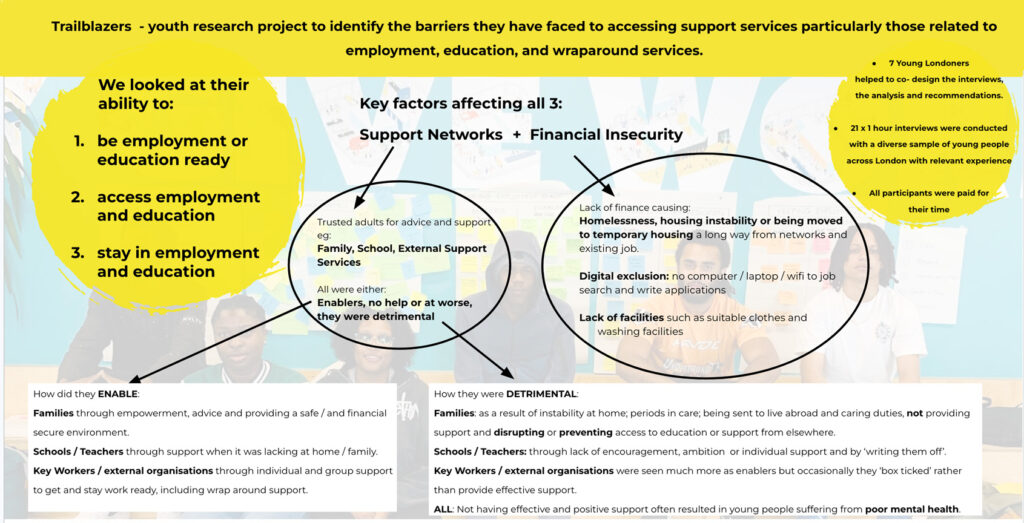
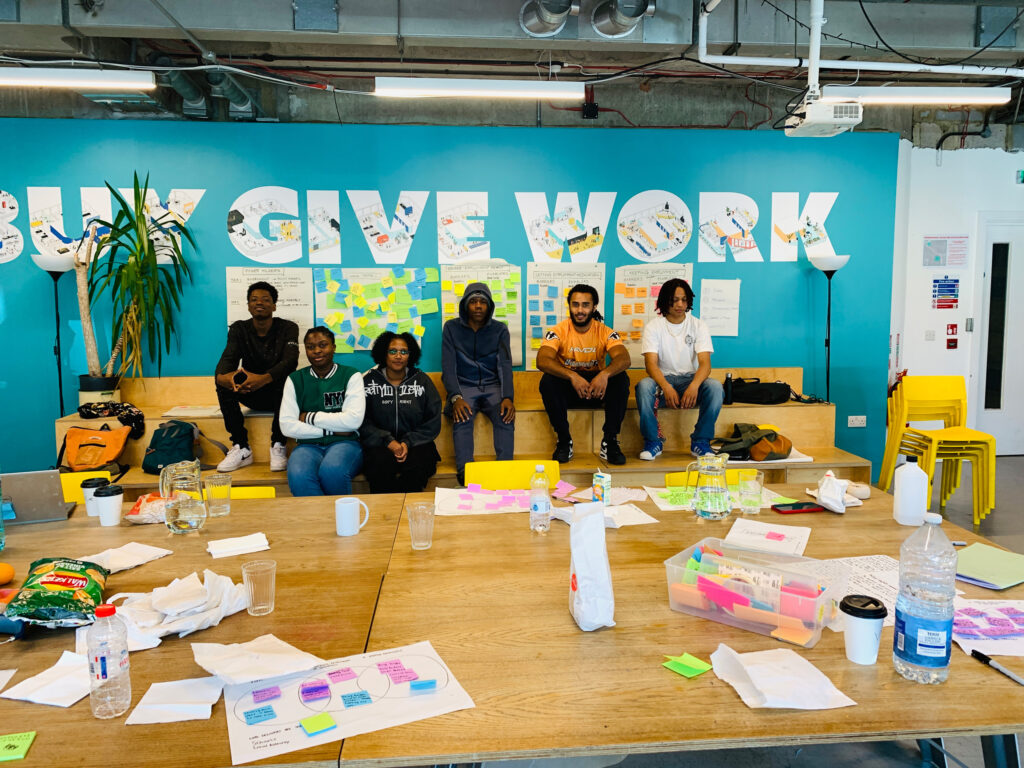
Together with The Loom and a team of seven young co-researchers, we interviewed 21 young Londoners aged 17 to 24 from 10 boroughs about their journey into work, education and training. Most had grown up facing financial hardship, and many were care experienced, young carers, or living with poor mental health. Their insights will help shape the GLA’s Youth Trailblazer programme.
What they told us was honest, sometimes painful, and full of determination. Every single young person we spoke to had dreams and aspirations: a barista, an accountant, a lawyer, a chef, a cyber security expert, dancers, actors and filmmakers. The question is whether the system is set up to help them get there.
The research identified three stages in the journey, with the same three threads running through all of them: having stable, supportive people around you, the constant threat of financial insecurity, and the strain on young people’s mental health.
Ahead of the curve: our findings and the Milburn Review
On 17 November 2026, Alan Milburn published the final report of his government-commissioned review into young people and work, From a Welfare State to a Working State. It sets out a ten-year plan to bring the share of young people not in education, employment or training down to around 5%.
Our young researchers reached many of the same conclusions more than a year earlier, by listening to young Londoners themselves:
- One person who cares. Our team called for one-to-one mentoring from 16 to 25. Milburn proposes a new Youth Opportunity Service, where every young person gets a named adviser within 14 days and a personal plan within four weeks.
- Fix the practical barriers first. Young people told us that clothes, travel and equipment stood in their way. Milburn’s plan says these practical barriers should start to be tackled within the first four weeks.
- Joined-up support. Our team wanted services to be joined up. The Youth Opportunity Service would bring employment, careers, health and practical support together in one place, building on existing services such as Youth Hubs.
- Experience matters. “If I can’t get work, how am I meant to get experience?” Milburn found that lack of experience was the most common barrier for NEET young people who want to work, and recommends a legal duty on schools to provide work experience.
- Employers have a role. The report proposes a £3,000 grant for employers who hire a young person who has been NEET for six months, with extra support for those facing bigger barriers, such as care leavers and disabled young people.
These are recommendations, and the government has yet to respond. But they show that the approach we take every day, putting young people in the driving seat, paying them for their time and giving them real experience, is exactly what the country needs.
1. Getting ready for work
Before a young person can even think about a job, the basics need to be in place. For many of the young people we spoke to, they weren’t.
A trusted adult made all the difference, whether a parent, a teacher or a key worker who really cared. But not everyone had one, and families, schools and services could just as easily be no help at all or, at worst, hold young people back. Some young people had been in care or semi-independent living, experienced homelessness or been sent abroad to live with relatives. Others had been labelled and written off at school:
“All it would have took during that whole thing was someone to ask me one question about what I was suffering at home.”
Then there’s the cost. Clean clothes, a washing machine, a laptop, Wi-Fi and a bus fare are all things many of us take for granted. As one young person put it, even if they were offered a free course with a guaranteed job at the end, they didn’t have the shoes, clothes, books or bag to turn up on day one.
2. Finding work
This is where the unfairness of the system really showed. Young people were acutely aware that families with money and connections can open doors that others simply can’t. Careers advice at school was a lottery: brilliant for some, while one young person who wanted to be a drama teacher was told to go into childcare.
Online applications felt like shouting into the void:
“I would say when I apply for jobs, not everyone gets back to me, whether that be with a rejection or acceptance. So sometimes I feel ignored.”
Many had done everything right. One young woman with a high-quality degree and nine months of local authority experience couldn’t understand why she was still unemployed. Another had volunteered, been mentored, made a documentary screened at Brixton Film Festival and joined several support programmes, yet none of it had turned into a paid job.
Unpaid internships and placements were a real barrier for those who simply couldn’t afford to work for free:
“As someone who helps out and pays rent to help my mum, I can’t afford to just have experiences, I need finances as well.”
The longer the search went on, the bigger the toll on young people’s confidence, motivation and mental health. One young person told us they felt they would never get a job because it had been more than a year.
3. Staying in work
Getting a job was only half the battle. Changes to child benefits and Universal Credit pushed some young people out of college or forced them to quit jobs they couldn’t afford to travel to.
Young people also told us that employers rarely seemed to care. Inductions were poor, one young person was regularly given shifts that finished at 1am with no bus home, and several described ageism and racism at work. Too often, the onus was on them to fit in:
“You can’t just expect a teenager to figure things out. You can’t expect a young adult to just figure things out.”
What needs to change
The message from young people was crystal clear. They don’t want faceless online processes. They want people who care, and a personalised plan to help them into work.
Our young researchers turned that into five principles for any new service: show genuine care, build two-way, respectful relationships, be transparent and accessible, be joined up with other support, and be backed by long-term funding, not stop-start projects.
They also made five recommendations for the Trailblazer programme:
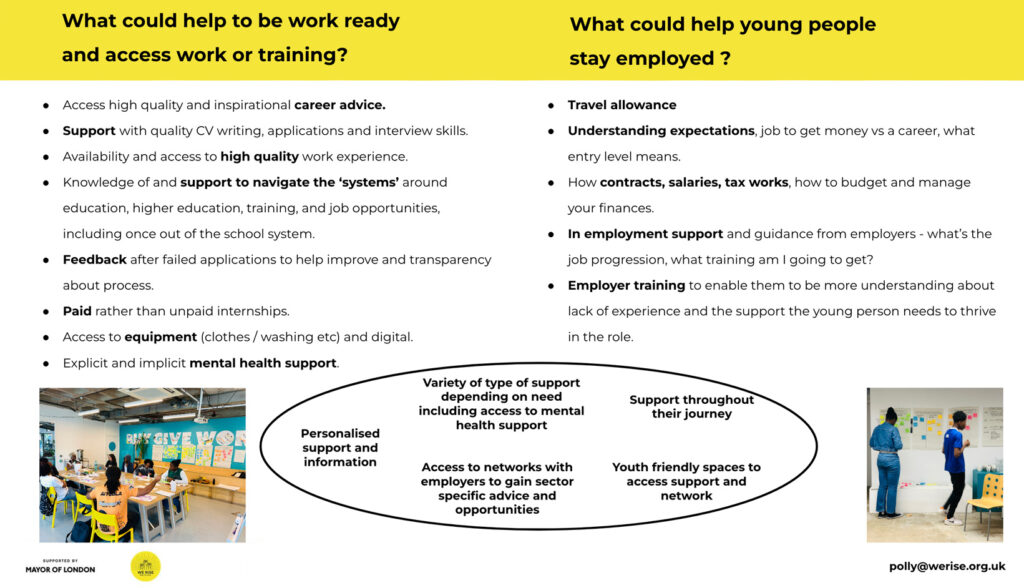
- One-to-one mentoring for every young person from age 16 to 25, with a small budget for things like travel and equipment.
- A curriculum of practical skills, from CVs and interviews to budgeting, tax and how local politics works.
- A wider “social network” of employees and college staff from across London who can host Q&As, offer shadowing and share advice.
- Tiered support that young people can draw on more or less as their circumstances change, including once they’re in a job.
- Warm, welcoming spaces like youth or sports clubs, with Wi-Fi, laptops, a kitchen, a bathroom and even a washing machine.
Crucially, young people with lived experience should keep shaping the programme, including through a youth Steering Group.
What can employers do now?
You don’t have to wait for a new programme to make a difference. Here’s what young people told us would help them get into work, and stay there:
- Pay for experience. Offer paid internships and placements, not unpaid ones.
- Give feedback. Let young people know why an application didn’t succeed, and be clear about your recruitment process.
- Help with travel. Consider a travel allowance, and think about how young people get home after a late shift.
- Explain the basics. Talk them through contracts, pay, tax and progression, so they know what entry level means and where the job can lead.
- Support them in the role. Offer a proper induction, training and someone to turn to.
- Train your managers. Help them understand that this may be someone’s first job, and what support they need to thrive.
Most of all, take the time. As one young person told us, “the whole point is that you’re meant to take the time.”
Want to open your doors to diverse young talent through paid work experience, mentoring or a youth-led project? Get in touch, we’d love to hear from you.
Read how our Alumni Research team co-designed this research in our case study.